组成图示
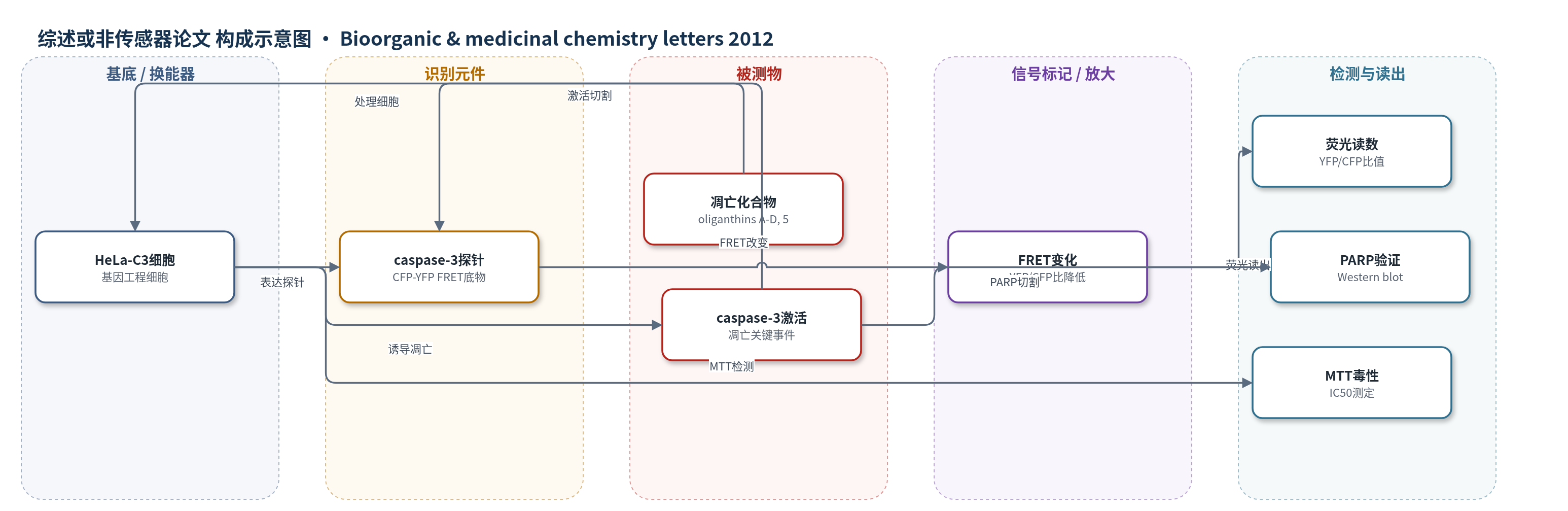
点击图片查看大图 · 依据论文自动绘制
传感器类型
综述或非传感器论文
检测对象
caspase-3 激活(caspase-3 activation)、细胞凋亡(apoptosis);样品基质:HeLa-C3 活细胞培养体系
检测原理
Garcinia oligantha 化合物进入 HeLa-C3 细胞后诱导凋亡通路,使 caspase-3 被激活。活细胞内表达的 CFP-YFP FRET 荧光生物传感器作为 caspase-3 特异性底物,被激活的 caspase-3 切割,导致 CFP 与 YFP 之间的荧光共振能量转移减弱,YFP/CFP 发射比下降。化合物浓度越高或作用时间越长,caspase-3 激活程度越高,YFP/CFP 比值越低;当比值降至 3 以下时判定为凋亡阳性。该荧光信号变化与 caspase-3 活性正相关,因此可用于半定量评估化合物的凋亡诱导能力。Western blot 检测 PARP 切割作为独立验证,MTT 法进一步测定细胞生长抑制 IC50。
检测灵敏度
原文未报告 LOD、线性范围、灵敏度斜率或 R^2。
效应效果
在 HeLa-C3 细胞中,化合物 1 和 5 在 2.5 μM、72 h 时使 YFP/CFP 发射比降至 3 以下,化合物 2、3、4 的有效浓度分别为 5、10、10 μM。Western blot 显示化合物 1 和 5(5 μM)以及化合物 2(10 μM)处理 24 h 后 PARP 明显切割,48 h 后化合物 1 和 5 几乎完全切割,化合物 2 切割增多。MTT 法测得 HeLa 细胞 IC50 分别为 1.58±0.09、1.52±0.12、4.15±0.12、7.82±0.06 和 0.90±0.03 μM,化合物 5 最低。作者认为 gaudichaudione H 具有最强凋亡诱导和细胞生长抑制作用,可能开发为抗癌候选药物。原文未报告选择性、稳定性、RSD、实际样品回收率或与 ELISA 等方法的直接对比。
传感器的构成
- 细胞平台:HeLa-C3 基因工程细胞,表达 caspase-3 荧光生物传感器,作为活细胞检测基底。
- 识别元件:caspase-3 特异性 FRET 荧光底物/生物传感器,识别 caspase-3 激活。
- 信号标记物:CFP/YFP 荧光蛋白对,caspase-3 切割后 FRET 效率改变,产生 YFP/CFP 荧光比变化。
- 被测物:Garcinia oligantha 分离物(oliganthins A-D、gaudichaudione H),诱导凋亡并激活 caspase-3。
- 读出:荧光发射比 YFP/CFP,比值降至 3 以下表示凋亡阳性。
中文摘要
从 Garcinia oligantha 茎的丙酮提取物中分离得到四个新化合物 oliganthins A-D(1-4)和一个已知笼状呋喃酮 gaudichaudione H(5),并通过质谱和核磁共振等光谱证据阐明其结构。五个化合物均利用基因工程 HeLa-C3 细胞评估凋亡诱导活性;该细胞表达可检测 caspase-3 激活的荧光生物传感器,基于荧光共振能量转移(FRET)原理,caspase-3 激活后 YFP/CFP 发射比降低。结果显示,所有化合物在 10 μM 或更低浓度下均可诱导细胞凋亡,其中化合物 1 和 5 在 2.5 μM、72 h 时使 YFP/CFP 比值降至 3 以下。Western blot 检测 PARP 切割进一步确认化合物 1、2 和 5 的凋亡活性。MTT 法测得 HeLa 细胞 IC50 分别为 1.58、1.52、4.15、7.82 和 0.90 μM,其中 gaudichaudione H 最低,表明其具有较强凋亡诱导和细胞生长抑制作用,可能开发为抗癌候选药物。
英文摘要
Four new compounds, oliganthins A-D (1-4), and one known caged xanthone gaudichaudione H (5) were isolated from the stems of Garcinia oligantha. The structures of the new compounds were elucidated by spectroscopic evidences. All of the five compounds were evaluated for their apoptosis-inducing effects using HeLa-C3 cells which have been genetically engineered to produce a fluorescent biosensor capable of detecting caspase-3 activation. All of them induced cell apoptosis at 10 μM or lower concentrations. The apoptotic activity of oliganthins A, B and gaudichaudione H were further confirmed by detecting the cleavage of PARP, which is the substrate of activated caspase-3, in these compounds-treated cells using the method of Western blot. Moreover, the values of IC(50) were measured for all five compounds on HeLa cells using the MTT assay. Among them, gaudichaudione H had the lowest IC(50) value of 0.90 μM, while the other four new compounds had IC(50) values of 1.58, 1.52, 4.15, and 7.82 μM, respectively. These results show that gaudichaudione H has the strongest apoptosis-inducing effect and cell growth inhibition effect among these xanthones and it may have the potential to be developed into a new anticancer agent.