组成图示
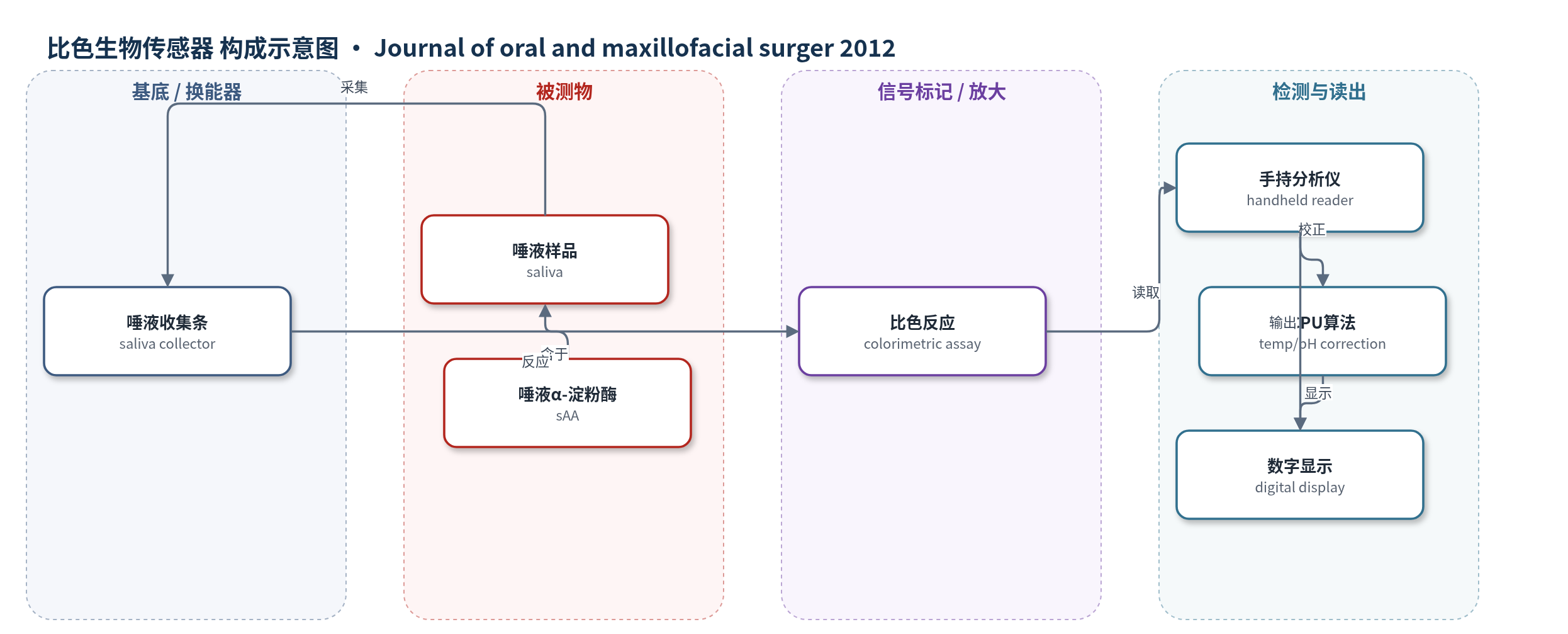
点击图片查看大图 · 依据论文自动绘制
传感器类型
比色生物传感器
检测对象
唾液α-淀粉酶(salivary α-amylase, sAA),样品基质:唾液(saliva)
检测原理
该传感器以唾液为样品基质,通过一次性唾液收集条在舌下吸附唾液,使唾液中的唾液α-淀粉酶(sAA)与条上比色反应体系接触。sAA作为交感神经活动的生物标志物,其活性/浓度随应激状态变化;比色反应将sAA活性转化为颜色或光学信号,信号强度随sAA活性变化。手持分析仪读取比色信号,中央处理器(CPU)算法对环境温度与唾液pH造成的信号漂移进行校正,最终在数字显示屏输出sAA活性水平。该过程无需复杂前处理,可在约1分钟内完成点-of-care检测。
检测灵敏度
—
效应效果
研究纳入76名健康受试者,在术前咨询、手术和术后随访三次就诊中多次检测。与咨询就诊相比,手术和随访就诊sAA水平更低(P<.01);手术就诊内sAA水平下降(P<.05),咨询和随访就诊内无显著变化。疼痛灾难化量表(PCS)无助感得分较高者在手术就诊中sAA水平更高(P<.05),无助感每增加1分,手术就诊平均sAA增加0.026 log(U/mL)。自报焦虑在手术就诊最高,疼痛在随访就诊最高;sAA与焦虑无显著相关,疼痛与sAA关系随就诊不同。结果支持便携式sAA生物传感器用于客观评估手术相关应激及人格特质差异。
传感器的构成
- 样品采集层:一次性唾液收集条(saliva collector strips),置于舌下15秒吸附唾液样品。
- 比色反应层:比色反应体系(colorimetric assay),将唾液α-淀粉酶(sAA)活性转化为可读取颜色信号。
- 分析读出层:手持分析仪(handheld reader),集成分析与报告功能,读取比色信号。
- 算法校正层:中央处理器(CPU)内置算法,校正环境温度与唾液pH变化。
- 显示层:数字显示屏(digital display),显示sAA活性水平。
中文摘要
目的:评估唾液α-淀粉酶(sAA)生物传感器在客观评价口腔手术相关应激反应及疼痛灾难化人格特质差异效应中的临床效用。方法:前瞻性队列研究纳入76名因阻生第三磨牙拔除就诊的健康受试者,在术前咨询、手术和术后随访三个时间点多次采集唾液,使用便携式比色sAA生物传感器测定sAA水平,并记录焦虑、疼痛、平静自评分及疼痛灾难化量表(PCS)基线得分。采用混合效应回归模型分析sAA水平与自评分在各就诊内及就诊间的变化,以及疼痛灾难化的贡献。结果:与咨询就诊相比,手术和随访就诊sAA水平较低(P<.01);手术就诊内sAA水平下降(P<.05),咨询和随访就诊内无显著变化。报告对疼痛无助感更强的个体在手术就诊中sAA水平更高(P<.05)。自报焦虑在手术就诊最高,疼痛在随访就诊最高。结论:sAA未按预期在手术就诊升高,但疼痛无助感高者在术前预期手术时sAA更高,为点-of-care评估手术相关应激及人格特质差异提供了概念验证。
英文摘要
PURPOSE: To evaluate the clinical utility of a salivary α-amylase (sAA) biosensor for assessing oral surgery-related stress responses and the differential effect of the personality trait of pain catastrophizing.
PATIENTS AND METHODS: A prospective cohort study was conducted in 76 healthy subjects who underwent elective removal of their third molars. Along with subjects' self-reports of anxiety and pain, biosensor-facilitated measurements of sAA levels were obtained at multiple time points during the preoperative consult, surgery, and postsurgical follow-up visits. In addition, subjects completed the Pain Catastrophizing Scale at baseline. Mixed-effect regression models examined changes in sAA levels and self-report ratings within and across visits and the contribution of pain catastrophizing.
RESULTS: The sAA levels were lower during surgery and postsurgical follow-up compared with the consult visit (P < .01). The sAA levels decreased during the surgery visit (P < .05) and did not change during the consult or follow-up visits. Individuals who reported greater helplessness to pain manifested higher sAA levels during the surgery visit (P < .05). Self-reported anxiety ratings were highest during the surgery visit, and pain ratings were highest during the follow-up visit.
CONCLUSIONS: The sAA levels did not show the predicted increases during the surgery visit compared with the consult and postsurgical follow-up visits or increases during the surgery visit. However, individuals who reported responding to pain with helplessness had higher sAA levels in anticipation of surgery, providing proof of concept for the value of point-of-care assessments of surgery-induced stresses and the differential effect of personality traits.