组成图示
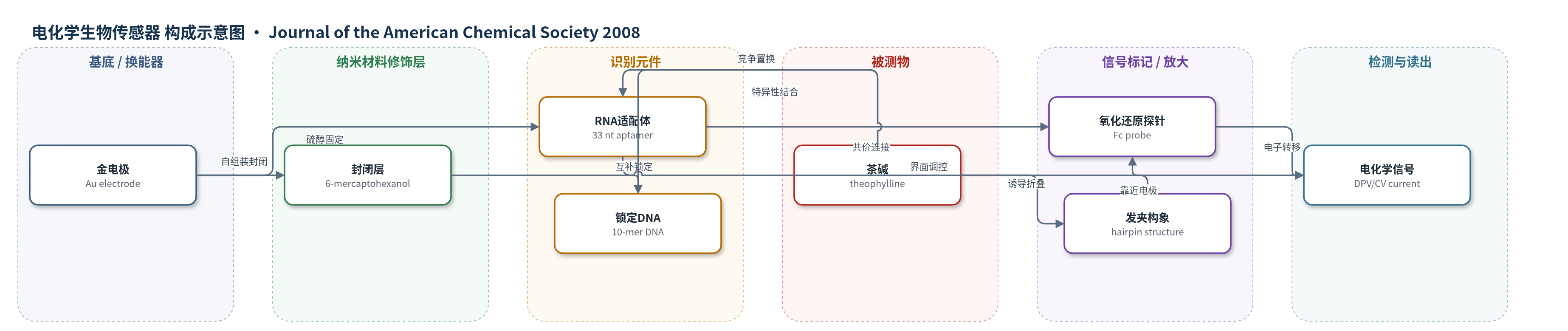
点击图片查看大图 · 依据论文自动绘制
传感器类型
电化学生物传感器
检测对象
茶碱(theophylline,1,3-dimethylxanthine);样品基质:血清(serum,20× diluted serum)及 HEPES 缓冲液
检测原理
该传感器采用无标记构象开关机制。固定于金电极的 33 nt RNA 适配体在无茶碱时呈开放构象,Fc 探针距电极较远,电子转移速率低,DPV 峰电流弱。茶碱进入适配体结合口袋后,通过堆积和氢键作用诱导 RNA 折叠为受限发夹构象,使 Fc 探针平均距离电极表面缩短,Fc/Fc+ 异相电子转移效率提高,峰电流随茶碱浓度增加。该过程无需酶或荧光标记,信号放大主要来自配体诱导的构象重排和电子转移距离缩短;可选 10-mer DNA 锁定链可进一步降低背景,茶碱通过竞争置换释放锁定链并触发响应。
检测灵敏度
LOD: 0.2 µM;动态范围: 0.2–10 µM
效应效果
传感器在 20 倍稀释血清(HEPES 缓冲液加 ProtectRNA RNase inhibitor)中可响应茶碱;直接稀释血清中信号受抑制,4 µM 以上无增加,转入空白缓冲液后恢复校准响应。选择性方面,1 mM 咖啡因和 0.01 mM 可可碱无明显干扰;无茶碱时 4–10 µM 可可碱响应低于茶碱的 9%,50 倍过量 0.1 mM 可可碱仅增加约 10% 响应。响应较快,<8 µM 时 2 min 内达 99% 最终信号,较高浓度 5 min 内完成;锁定型 >1 µM 时 5–15 min。洗涤或 6 M guanidinium hydrochloride 过夜处理后背景恢复 50–70%。RNase-free 条件下 4 °C 保存两周活性不降。作者认为其比荧光法更灵敏、比色谱法(约 3 h)更快,适合血清茶碱快速选择性检测。
传感器的构成
- 基底/换能器电极:金电极(Au electrode),提供导电基底与电子转移界面。
- 识别元件:33 nt RNA aptamer(theophylline-binding RNA aptamer),5′-C6-disulfide 端经硫醇化学固定于金表面,特异性识别茶碱。
- 信号标记物:ferrocene(Fc)redox probe,经 Fc-carboxylic acid N-hydroxysuccinimide ester 共价连接至 3′-amino 端,提供 Fc/Fc+ 电化学信号。
- 封闭剂:6-mercaptohexanol,封闭剩余金表面,降低非特异吸附并调控界面电子转移。
- 可选锁定链:10-mer DNA,与 RNA aptamer 互补结合锁定开放构象,茶碱结合后竞争置换。
中文摘要
茶碱是治疗哮喘的常用支气管扩张剂,有效血浆浓度窗口窄(20–100 µM),高浓度可致毒性。现有气/液相色谱和免疫分析常受结构相近的咖啡因和可可碱干扰。本文首次报道一种基于 RNA 适配体的无标记电化学传感器用于检测茶碱。该传感器以 33 nt RNA 适配体为识别元件,5′-C6-disulfide 端通过硫醇化学固定于金电极,3′-amino 端共价连接 ferrocene(Fc)氧化还原探针,剩余金表面用 6-mercaptohexanol 封闭。无茶碱时适配体呈开放构象,Fc 远离电极,电子转移弱;结合茶碱后形成发夹构象,Fc 靠近金表面,Fc/Fc+ 电子转移效率提高,差分脉冲伏安法峰电流增强。传感器在 HEPES 缓冲液及 20 倍稀释血清中可检测茶碱,检出限 0.2 µM,动态范围 0.2–10 µM,对 1 mM 咖啡因和 0.01 mM 可可碱无明显干扰,响应数分钟完成,4 °C 保存两周仍保持活性。
英文摘要
An electrochemical RNA aptamer-based biosensor for rapid and label-free detection of the bronchodilator theophylline was developed. The 5'-disulfide-functionalized end of the RNA aptamer sequence was immobilized on a gold electrode, and the 3'-amino-functionalized end was conjugated with a ferrocene (Fc) redox probe. Upon binding of theophylline the aptamer switches conformation from an open unfolded state to a closed hairpin-type conformation, resulting in the increased electron-transfer efficiency between Fc and the electrode. The electrochemical response, which was measured by differential pulse voltammetry, reaches saturation within a few minutes after addition of theophylline, and the dynamic range for detecting theophylline is 0.2-10 muM. The electrode displays an inhibited response when applied directly in serum samples treated with RNase inhibitors; however a full response to the theophylline serum concentration was obtained by transferring the electrode to blank serum-free buffer solutions. It was demonstrated that theophylline is detected with high selectivity in the presence of caffeine and theobromine.